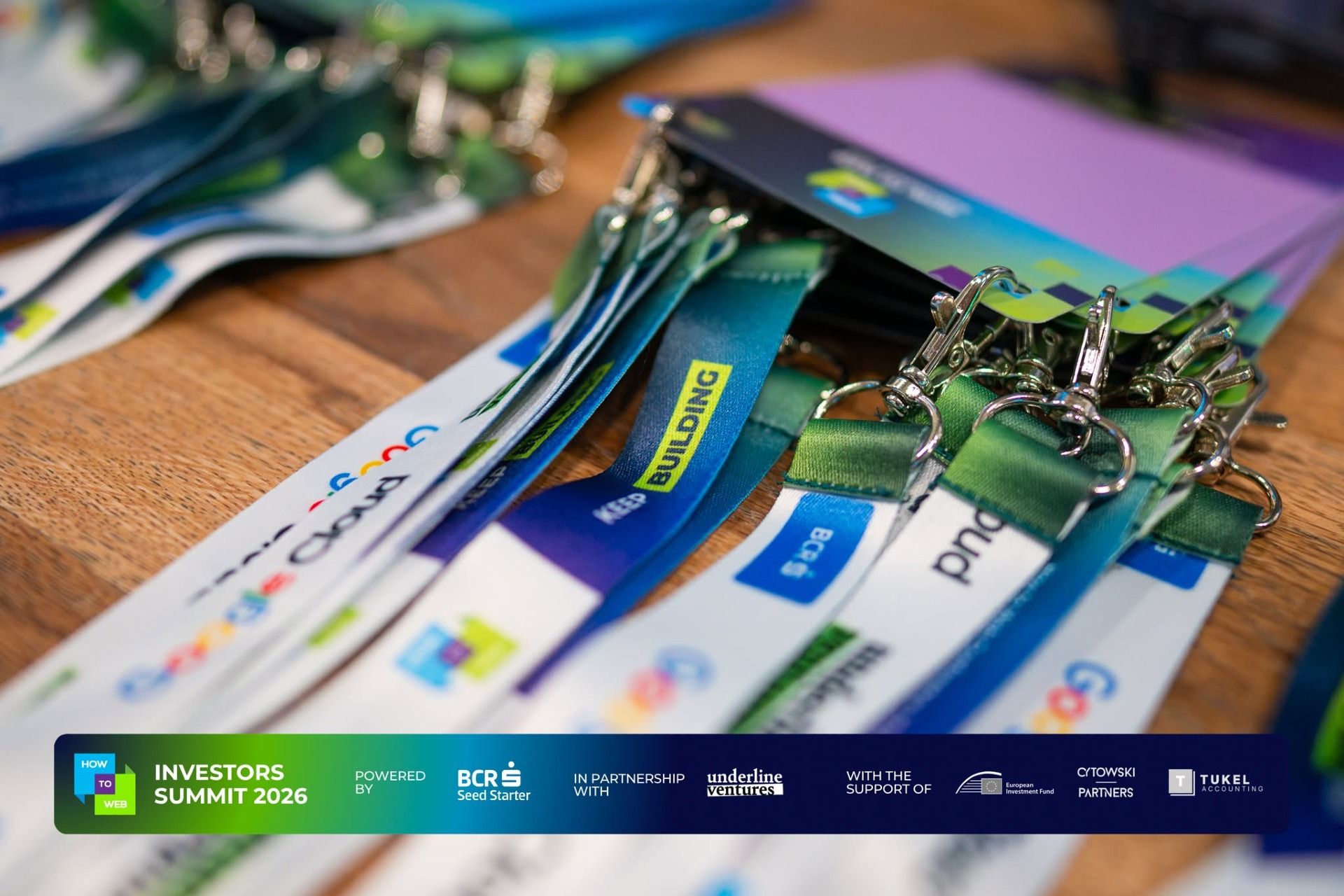
How to Web 2026: custom from the first application to the last diploma
At a glance
3
conference days, 6–8 October 2026
~70
volunteers on bibde
3
custom flows: application, onboarding, diploma
1
small issue, solved promptly
After a race and a festival, this time we worked with a conference organizer: How to Web 2026, in Bucharest, from 6 to 8 October. The responsibility was big, and bibde rose to the organizers’ expectations.
About How to Web
How to Web is considered the most important startup, technology and entrepreneurship event and conference in Eastern Europe. It is organized every year in Bucharest, by Asociația pentru Antreprenoriat și Inovație, and the latest edition, How to Web 2026, took place on 6–8 October 2026 at Face Convention Center.
The event brings together startup founders, top investors, industry leaders and representatives of major international companies such as OpenAI, Meta, Google and Stripe. Its main goal is to connect the technology and business ecosystem, to make partnerships, mentoring and funding for startups possible, including through well-known competitions such as Spotlight.
Their process, on our platform
The volunteer coordinator ran the application through an external tool and imported the already accepted volunteers into bibde. From there, everything else happened on the platform.
On bibde she defined the volunteering points and the roles of each point, and wrote the training materials for the volunteers. After the assignment, the volunteers could see the guide for their own role in the platform, so they knew what was expected of them.
Three things that were custom
Application
The organizers’ own application flow, in their own tool.
Onboarding
A custom flow with documents to sign: health and safety (SSM), the contract, fire safety (PSI) and role-specific training.
Diploma
A custom volunteering diploma.
The platform supported all of these particularities with flying colors.
Everyone placed by their availability
Some volunteers were available for the whole conference, others only for a few hours. In both cases they were assigned according to their availability, so a person who could give two hours was given a two-hour job, not a place in a full-day schedule.
On the days, volunteers checked in when they started working and checked out at the end of their shift.
Support on call, for the coordinator to run the event
The bibde support team was on call for the whole conference. When a small problem appeared, about changing a checkout time, we stepped in promptly. That is what we do whenever we know an event is ongoing: the coordinators should be able to look after the event, not to debug.
The compliance part helped us a lot: signing the contracts, the training, generating the certificates. It all happened in the background. In other years that took me hours; this time it took a few minutes. Next year I will focus on developing the volunteer experience, instead of starting from zero, as I do every year.
Organizing a conference?
Talk to us for 20 minutes about your next edition.
The bibde team
The platform behind the volunteers
bibde is the platform used to onboard, assign and follow the volunteers of How to Web 2026.
Related stories
Guitar Meeting Festival 2026: 170 volunteers, over half of them minors, no incidents
Four days, several stages and more than 10,000 participants: how about 170 volunteers, over half of them minors, were recruited, briefed and followed minute by minute on bibde, with no incidents.
Urme pe Play 2026: a thousand runners, a hundred volunteers, one platform
Two days, five tracks and a kids’ race: how about a hundred volunteers were recruited, assigned, briefed and followed on race day, all on bibde, at the biggest Urme pe Play so far.