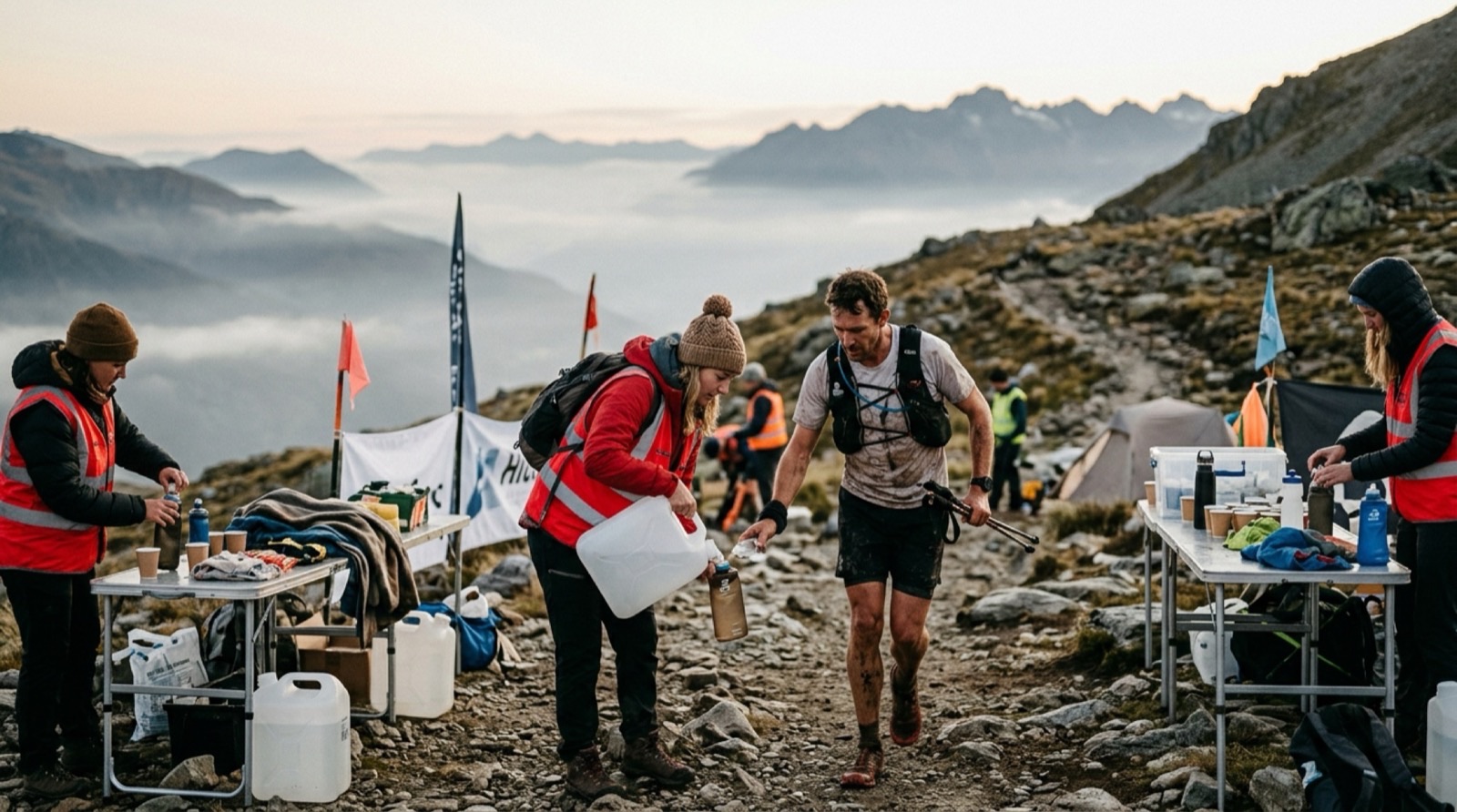
Six tracks, two days, one crew list
At a glance
1,000
runners across six tracks
100
volunteers recruited and briefed
6
tracks running over two days
1
list everyone worked from
Urme pe Play puts six tracks on the mountain over two days. A thousand runners start, finish, and get back down — and the only reason that looks calm from the outside is the hundred people standing at the junctions, the water points and the finish arch.
Clubul Montan Sibiu has been organizing races in these mountains for years, and for years the crew was held together the way most clubs hold it together: a signup form that dumped into a spreadsheet, a second sheet for who was actually coming, a WhatsApp group per track, and one person’s memory as the index to all of it.
It worked, in the sense that the race always happened. But six tracks over two days means shifts that overlap, marshals who work Saturday and want Sunday off, and people whose “yes” in spring never turns into a person on the mountain. Somebody had to hold all of that in their head, and that somebody was also supposed to be running the race.
One form, six tracks
The first move was small: one application form for the whole event, with the five questions that actually decide where someone can stand — which day or days they’re free, whether they’ve worked a mountain point before, languages, whether they drive, and t-shirt size. Applications came in steadily; nobody re-typed a name.
Selection stopped being an archaeology project. Returning volunteers showed up as returning volunteers, with the point they worked last edition attached to their name — so the people who already knew a junction went back to it, and the club spent its attention on the newcomers instead.
Where the gaps were, in public
Points became columns, volunteers became cards, and both race days sat side by side. The useful part was not the dragging — it was that a thin shift could no longer hide. With six tracks overlapping, the board showed exactly which hours on Sunday were covered by two people instead of four, early enough to do something about it.
Briefings, documents and consents travelled with the allocation instead of chasing it. Each volunteer opened one page: their point, their track, their shift, who leads it, what to do when a runner arrives hurt. Nothing was printed, and nobody had to read 24 pages to find their own line.
A hundred volunteers is not a list. It’s a hundred people who each need to know where to stand and why. That’s the part bibde took off us.
Before
- Two spreadsheets and one person’s memory
- A WhatsApp group per track as the record
- One long manual sent to all 100 people
- Documents printed, signed, scanned, chased
- Thin Sunday shifts discovered on Sunday
After
- One applicant list for all six tracks
- One thread per point, searchable
- A one-page brief per role, per shift
- Both race days visible side by side
- Check-ins live, so gaps were named early
The next edition starts half-built
Certificates and logged hours went out after the weekend, with a short feedback form attached. The answers are the brief for the next edition: which points were overstaffed, which shift starts were pointless, which junction needs two people rather than one.
That is the part Răzvan mentions first. The hundred people who worked Urme pe Play 2026 are still there, with their points and their hours next to their names — so the next edition does not begin with a blank sheet and a question mark.
Răzvan Morariu
President, Clubul Montan Sibiu
Răzvan leads the club that puts Urme pe Play on the mountains around Sibiu: six tracks, two days, a thousand runners and the hundred volunteers who make all of it possible.